
From single-dwelling builds to multi-unit residential and commercial developments, we structure the right construction or development loan so your project gets funded at every stage — with staged draw-downs, so you pay interest only on what you've drawn.


A standard home loan doesn't fit a build or a development. You need funding that releases in stages as the work progresses, keeps holding costs low while there's no income coming in, and is assessed on the project's viability — not just your payslip. Get the structure wrong and the project stalls between stages; get it right and it stays funded from slab to completion.
Funds release at each milestone — slab, frame, lock-up, fixing, completion — so you're never over-committed.
You pay interest only on what's been drawn at any point, keeping holding costs down through the build.
Lenders weigh feasibility, end value and exit — not just personal income — opening doors banks alone won't.
Unlike a standard mortgage that hands over the full amount at settlement, a construction or development loan releases funds in stages — called progress draw-downs — aligned to your builder's schedule. In three steps:
Money is drawn down at each build milestone against your fixed-price contract and council-approved plans, not all at once.
Interest is charged only on the amount drawn at any point, which keeps holding costs low while the build progresses.
On practical completion a build loan typically converts to a standard mortgage; development facilities are repaid from sales or refinanced.
For larger residential or commercial developments, mezzanine and development finance unlock higher leverage and structure for projects a single traditional lender won't touch alone. Because these facilities are assessed on feasibility, pre-sales and exit strategy rather than income alone, how the application is packaged makes a real difference to what you're offered. As part of that, we can weave a business loan or working capital facility into the funding mix where it strengthens the overall structure.
We review your project details, land value, build cost and exit — and give you an indicative read on what's achievable and how lenders will see it.
We shortlist from 50+ lenders — banks, non-banks and private credit — who specialise in construction and development at your scale.
Conditional approval is issued so you can move to contracts and council approvals with confidence. Timeframes are indicative and lender-dependent.
Funds release at each build milestone — slab, frame, lock-up, fixing and practical completion — usually after a valuer inspection.
A build loan typically converts to a standard mortgage; a development facility is repaid from sales or refinanced to a long-term hold loan.
"Construction finance is priced and approved on the project, not just the person. Knowing what a lender needs to see is the difference between a deal that funds and one that stalls." — Pooja Choudhary
Finance for individuals building their home or investment property. Stage-based draw-downs align with your builder's fixed-price contract and council-approved plans.
For developers building 2–50+ dwellings — townhouses, apartments or estate subdivisions. Structured around pre-sales, feasibility and site costs.
Funding for offices, warehouses, retail centres and industrial builds. Lenders assess tenancy pre-commitment, yield on completion and exit strategy.
Commercial Property Loan →Bridges the gap between senior debt and equity so developers can increase leverage. Typically for projects needing higher funding against total project cost.
Funding to purchase and subdivide land before construction starts. Often a short-term facility with a clear exit to a construction or takeout loan.
Investment Property Loan →For major renovations or full demolition and rebuild. Lenders assess the as-if-complete valuation plus your builder's credentials and licence.
Construction finance is assessed differently to a standard mortgage — lenders focus on the project's viability, not just your personal income. Figures are indicative only and subject to lender assessment, project feasibility and market conditions.
| What matters | Typical position | Why lenders care |
|---|---|---|
| Building contract | Fixed-price, licensed builder | Caps cost risk and confirms scope |
| Plans & permits | Council-approved | Project can lawfully proceed |
| Security / equity | Land owned or used as equity | Establishes the lender's position |
| Exit strategy | Owner-occupy, rent or sell | Shows how the loan gets repaid |
| Pre-sales (development) | Varies — bank vs private credit | De-risks larger multi-unit facilities |
| Indicative LVR / facility | Indicative only — ask us* | Depends on project risk & lender |
*LVR, facility size, rates and fees vary by lender, project type, LVR, pre-sales and feasibility, and move with the market. They're indicative only and confirmed in writing before you commit — ask us for a personalised indicative quote. Our broker service is free to you; lenders pay our fee.
Construction and development approval is built around feasibility, end value and exit — not just your income. Tell us about the project and we'll map it against the lender panel, banks and private credit alike.
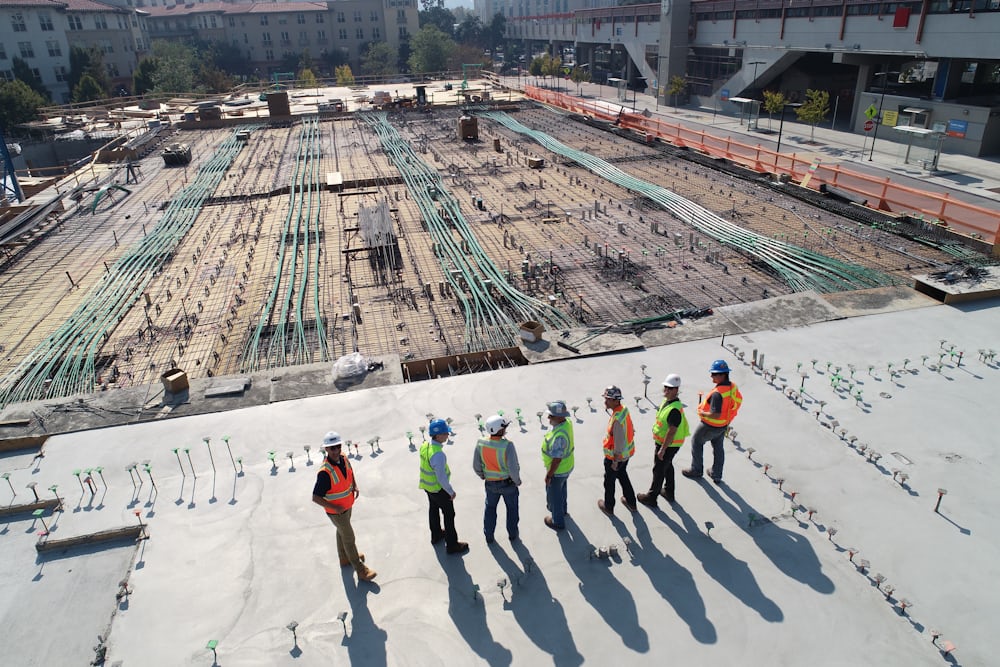
Construction and development finance suits anyone building, subdividing or redeveloping — owner-builders, investors and experienced developers alike. If there's land, a builder and a plan, there's likely a structure that fits.
Get a free project assessment →New home or investment build on owned land
Demolish and rebuild against as-if-complete value
2–50+ dwelling residential developments
Buy, subdivide, exit to construction or sale
Offices, warehouses, retail and mixed-use
Large-scale reno assessed on end value
Don't see your project type? Most residential, commercial and mixed-use builds can be structured. Approval and terms are subject to lender assessment and project feasibility.

Before founding Probiz, Pooja spent years inside NAB and ANZ, assessing lending from the credit side of the table. Construction and development finance is priced and approved on feasibility, draw structure and exit — and she knows what a lender actually needs to see. We're a broker, not a lender: we compare banks, non-banks and private credit and package your application for the best outcome, rather than sending you to a single bank.
Structured our development finance when the banks kept saying no. Clear, fast, and no jargon...
We recently had the pleasure of working with Probiz Finance and could not be more satisfied with the experience...
I've relied on Probiz Finance for my lending needs for quite some time now, and every experience has been...
Not necessarily. Some lenders will approve a simultaneous land-and-construction loan if you're purchasing land and building in one transaction. However, owning the land outright before applying increases your borrowing capacity and reduces lender risk — which can result in better terms.
Standard residential construction typically uses five progress payments: slab, frame, lock-up, fixing and practical completion. Development finance may have a customised draw schedule aligned to your development agreement. Each draw-down usually requires an inspection from the lender's valuer.
Yes. Knockdown-rebuild (KDR) projects are eligible for construction finance. The lender values the land as security and lends against the as-if-complete value of the new home. You'll typically need a fixed-price contract, a licensed builder, and council demolition and build permits before funds are released.
On practical completion, a construction loan typically converts to a standard home or investment mortgage with the same lender, at the terms agreed at approval. For development finance, most facilities are repaid from sales proceeds or refinanced to a long-term hold loan.
Requirements vary by lender and project size. Major banks often require pre-sales covering a large share of the debt (signed contracts). Non-bank lenders and private credit can be more flexible — sometimes requiring fewer pre-sales for experienced developers with strong feasibility. We map which lenders suit your pre-sales position.
No. During the build phase you generally pay interest only on the amount drawn, not the full approved facility. This reduces your cash outflow while the property isn't generating income. Full principal-and-interest repayments typically begin only after the loan converts at completion.
We can usually give you an indicative read quickly once we've seen the project details, contract and plans. Formal conditional approval depends on the lender, the valuation and your documentation, so timeframes are indicative and lender-dependent rather than guaranteed. We'll tell you honestly where your project sits.
Often, yes. Where a build or development sits inside a business or trust structure, we can look at how a business loan or working capital facility fits alongside the construction facility in the overall funding mix. Structuring this correctly matters for both approval and tax, so we work through it with you and your accountant.
No obligation. Tell us about your build or development — land, build cost and exit — and we'll come back within one business day with a read on how lenders would see it.
No cost, no obligation, no cookie-cutter advice — just a real conversation about the right structure for your build or development. Book a strategy session with Pooja.